Leak detection, East London & Essex
Find the leak without
lifting the floor —
acoustic, thermal and tracer-gas
Damp patch on a ceiling, water meter spinning with everything off, unexplained heating-pressure drop? We pinpoint hidden leaks to the metre before you take a single tile up, and give you a written report your insurer will accept.
What it covers
Pinpoint leak detection, pressurised mains, hot & cold pipework, central heating
Most leaks announce themselves with a symptom — a damp patch, a meter that won't stop ticking, heating-system pressure that keeps dropping, a warm spot on a tiled floor — but the actual leak is rarely where the symptom shows up. Water travels along joists, falls down cavities and emerges metres from the original failure. The job of leak detection is to find the real source before any flooring, tiling or plaster is touched.
We work on every kind of pressurised leak across East London and Essex: cold mains, hot and cold pipework under floors, under-floor heating loops, central heating systems with mystery pressure loss, swimming pool circuits, and external supply leaks between meter and property. Our kit combines acoustic listening, thermal imaging cameras and inert tracer-gas equipment, used together rather than relying on a single method.
The output is a written, plain-English report: where the leak is, how confident we are in the location, what the repair will involve and a fixed price to put it right. If you're claiming on insurance, the report is formatted for major UK insurers and we'll speak to your loss adjuster directly if needed.
What happens if you wait
A hidden leak doesn't stop, it spreads, rots and bills you twice
An unfound leak quietly soaks structural timber, ruins flooring, feeds black mould and silently runs up your water bill. Worse, most insurers won't pay for damage caused by a leak you 'should have known about', and the longer it runs, the harder that conversation gets.
Saturated joists, swollen flooring and crumbling plaster, usually only discovered when the flooring is lifted to make the repair.
A continuous leak the size of a pinhole adds hundreds of litres to your meter every week. Customers usually find it on the bill before they hear it.
Insurers increasingly insist on a documented leak detection report before paying out for water damage. A guess from a builder isn't enough.
Common mistakes we fix every week
- Pulling up flooring to 'have a look' before any detection, adds cost and rarely finds the source.
- Topping up heating-system pressure twice a week and ignoring it.
- Assuming a damp patch directly below a pipe is where the leak is.
- Confusing condensation with a leak, and vice versa.
- Letting a general builder break tiles to 'find it' without proper kit.
- Waiting for the leak to 'dry up' on its own.
Our process
A predictable, step-by-step system, no surprises, no upsells
- STEP 01Initial assessment
Symptoms, meter readings, system pressure history and property layout taken on the call.
- STEP 02Pressure & isolation testing
Confirm which system is leaking, cold main, hot, central heating or waste.
- STEP 03Acoustic & thermal scan
Pinpoint the leak using listening sticks, correlators and thermal imaging.
- STEP 04Tracer-gas confirmation
Where needed, inert hydrogen/nitrogen tracer confirms the location to the metre.
- STEP 05Written report & quote
Plain-English report, photographs and a fixed-price quote to carry out the repair.
What you get
Concrete outcomes, not vague promises
Pinpoint detection means the repair opens the smallest possible area, saving floor, tile and decoration costs.
Acoustic + thermal + tracer gas used in combination, far more reliable than any single method alone.
Written report formatted for major UK home insurers, with photographs and method statement.
Detection is a single fixed fee, regardless of how long it takes, no hourly creep.
If we find it, we can fix it, and the quote sits inside the same report.
If the symptom isn't a leak, we'll tell you what it actually is, condensation, capillary action, faulty seal, etc.
Technical detail
How professional leak detection actually works
Professional leak detection is part science, part judgement. The kit narrows the area down to a few metres; experience and method narrow it to a single fitting. The difference between cheap detection and good detection is how many techniques are stacked together before any flooring is touched.
Acoustic detection
Pressurised water escaping from a fitting makes a high-frequency hissing or rushing sound that travels along the pipe. Ground microphones and listening sticks amplify that sound at the surface. On metal pipework, acoustic alone is often enough; on plastic, it's a starting point.
Thermal imaging
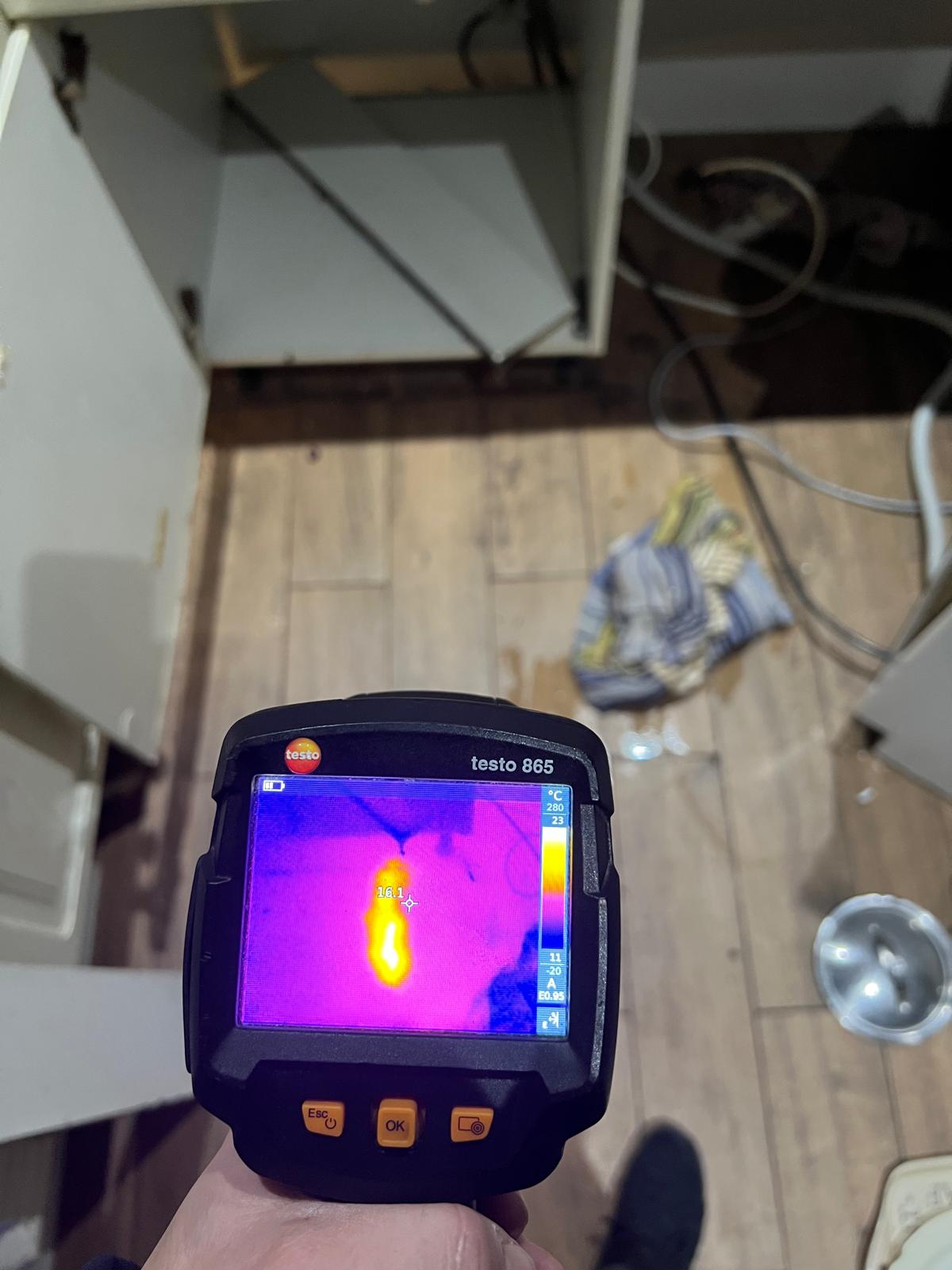
Hot-water and central-heating leaks show up clearly on a thermal camera, a warm trail where there shouldn't be one. We also use thermal to spot saturation patterns on floors and walls before any lifting.
Tracer gas
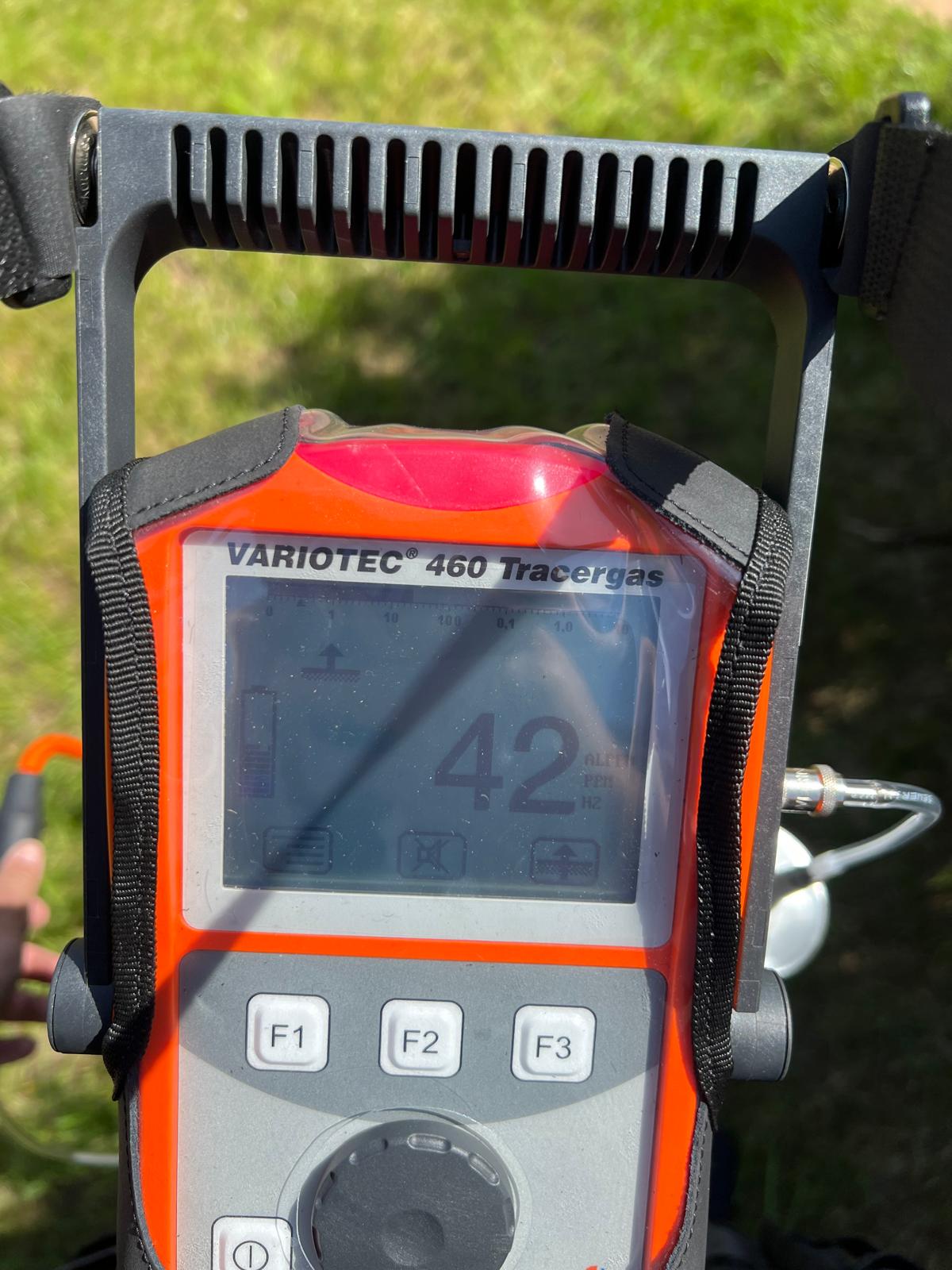
When acoustic and thermal don't give a definitive answer, typically on plastic mains or under-floor heating loops, we isolate the pipe, introduce an inert hydrogen/nitrogen mix, then walk the route with a sensitive gas detector. The gas escapes where the water was escaping, and the detector pinpoints it to the metre.
Insurance and Trace & Access
Most UK home insurance policies include a 'Trace & Access' clause, they will pay for the cost of finding the leak (often up to a defined limit) provided the report is from a qualified contractor. Our reports are designed to satisfy that clause and we're happy to deal directly with the loss adjuster.
Frequently asked
Straight answers to the questions East London & Essex homeowners ask us most
How much does leak detection cost?+
Detection is a fixed fee that covers the first 2–3 hours on site, including a full written report. The fee is the same whether we find the leak in 20 minutes or 3 hours.
Will my insurer pay for leak detection?+
Almost certainly, most UK home insurance policies include 'Trace & Access' cover. Our reports are formatted to satisfy that clause; you typically pay us and reclaim from your insurer.
Do you have to lift floors or break tiles?+
No. The entire point of professional leak detection is non-invasive pinpointing. Any opening up happens only at the repair stage, and only at the exact spot where we've confirmed the leak.
How accurate is the detection?+
On metal pipework, typically accurate to within 10–30cm. On plastic pipework using tracer gas, similar accuracy. We always confirm the location before any flooring is touched.
Can you find leaks under concrete floors?+
Yes. Acoustic detection and tracer gas both work through concrete and tile. Under-floor heating leaks in concrete screed are one of the most common jobs we attend.
How quickly can you come out?+
Usually within 24 hours across East London and Essex in most cases. For active escape of water, we'll prioritise the call.
Can you also do the repair?+
Yes. Most customers prefer one team for detection and repair, we'll include a fixed-price repair quote inside the detection report.
What if you can't find the leak?+
Extremely rare. If after a full detection visit no leak is found, we'll set out what we ruled out, what the symptom is likely to be (condensation, seal failure, capillary etc.) and what to monitor, at no extra charge.
Do you detect on commercial properties?+
Yes. Cafés, offices, dental practices and small commercial units across East London and Essex. Out-of-hours visits are available.
What guarantee do you offer on the repair?+
Any repair we carry out is covered by our written workmanship guarantee.
Related services
Stop guessing. Find the leak today.
Rapid non-invasive detection across East London and Essex, with a written report your insurer will accept.
Fully insured · Workmanship guarantee · 7 days a week